

nemi Motion
nemi Motion is a particularly compact, wireless accelerometer and rotation rate sensor for highly dynamic measurement tasks. With dimensions of just 25 × 25 × 14.5 mm and a weight of only 10 g, it comes close to the size of very small wired piezo accelerometers – yet it needs no measurement cables at all.
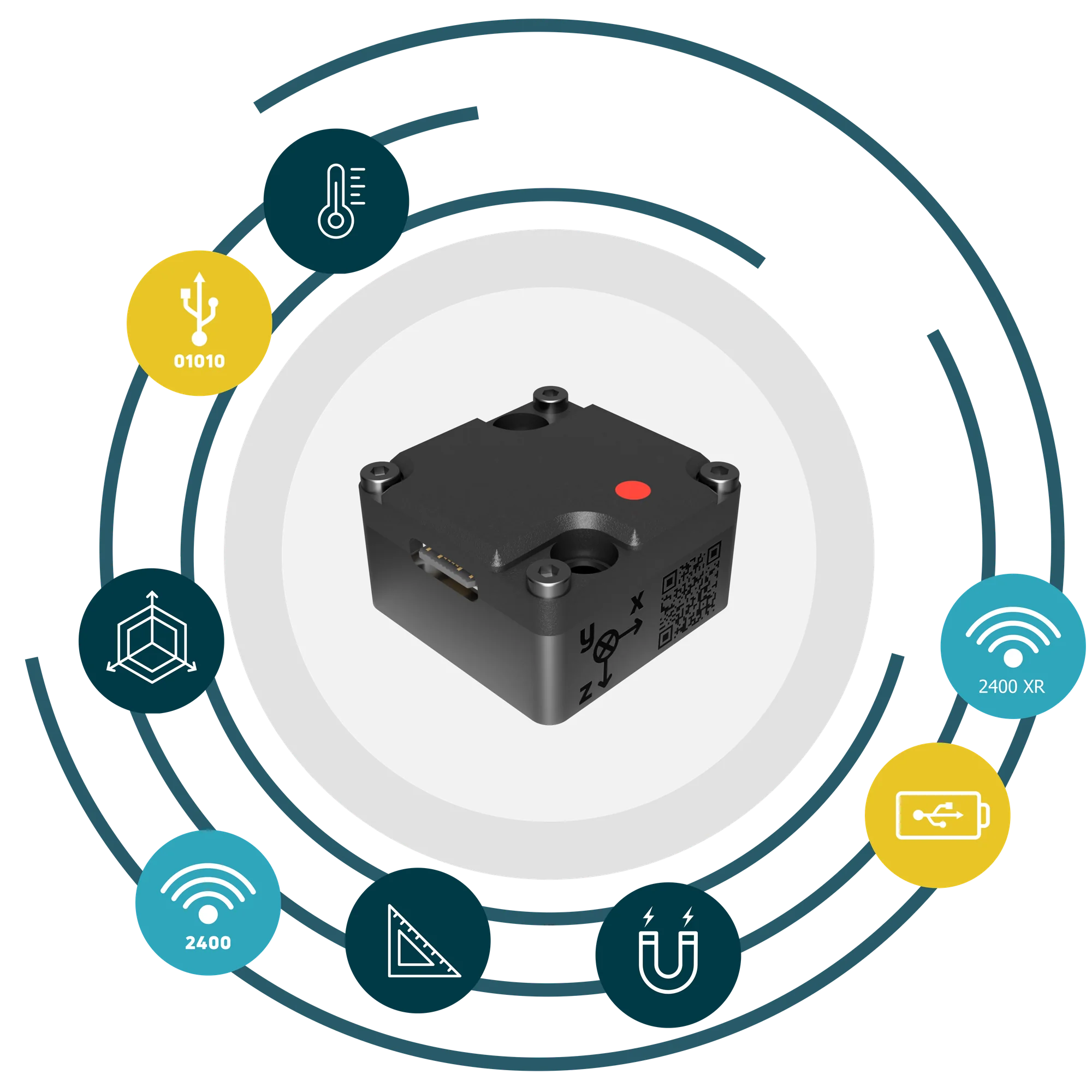
With sampling rates of up to 3.84 kHz on the six accelerometer and gyroscope axes and an acceleration measuring range of up to 256 g or more than 2,500 m/s², nemi Motion is also suitable for demanding, highly dynamic applications. In addition to the 3-axis accelerometers and 3-axis rotation rate sensors, a 3-axis magnetometer and a temperature sensor are integrated. This provides a compact wireless inertial measurement unit (IMU) with a total of 9 degrees of freedom.
The integrated rechargeable battery and nemi Link 2400, the particularly energy-efficient and robust wireless technology developed by i4M, enable fully wireless operation for many hours and wireless ranges of up to 350 m. This eliminates not only measurement cables, but also the associated installation effort and possible mechanical influences on the test object.
nemi Motion is the most cost-effective product within the nemione® product family and offers an ideal entry into the nemi Link 2400 product portfolio. Typical fields of application are in test & measurement, for example on test benches, in prototype testing or for measurements on small and lightweight components.
Wherever small dimensions and minimal weight are decisive, nemi Motion shows its strengths: the test object is influenced only minimally, while wireless data transmission and simple screw mounting enable particularly fast and flexible measurement set-ups.
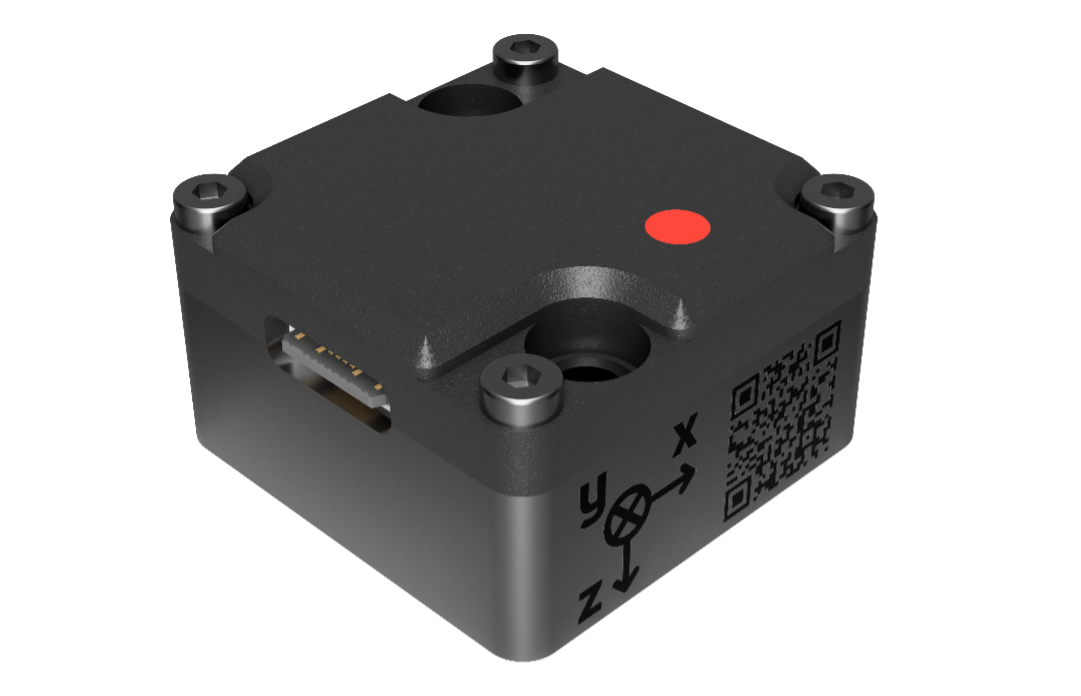
Very small and lightweight design (25 x 25 x 14.5) mm, 10 grams
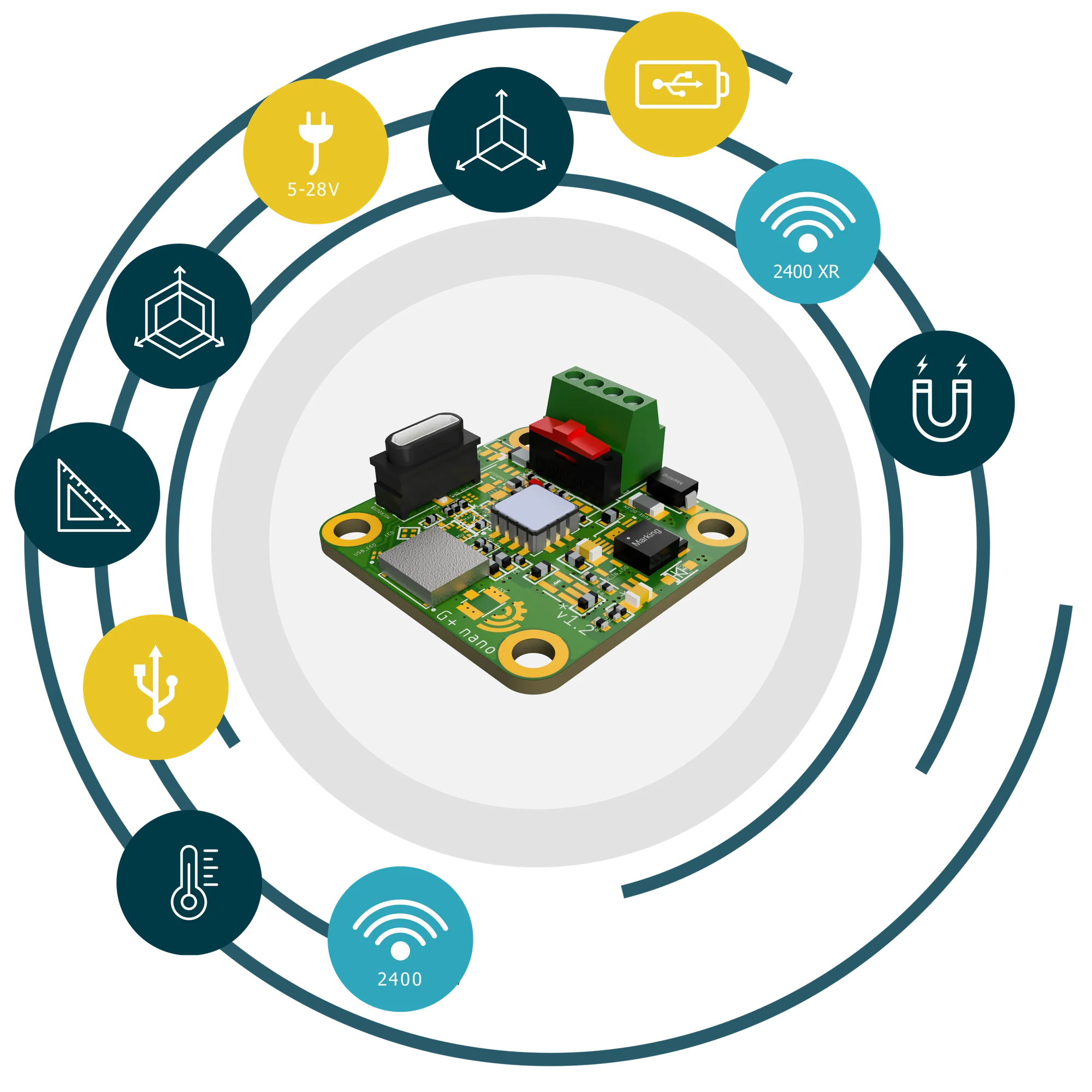
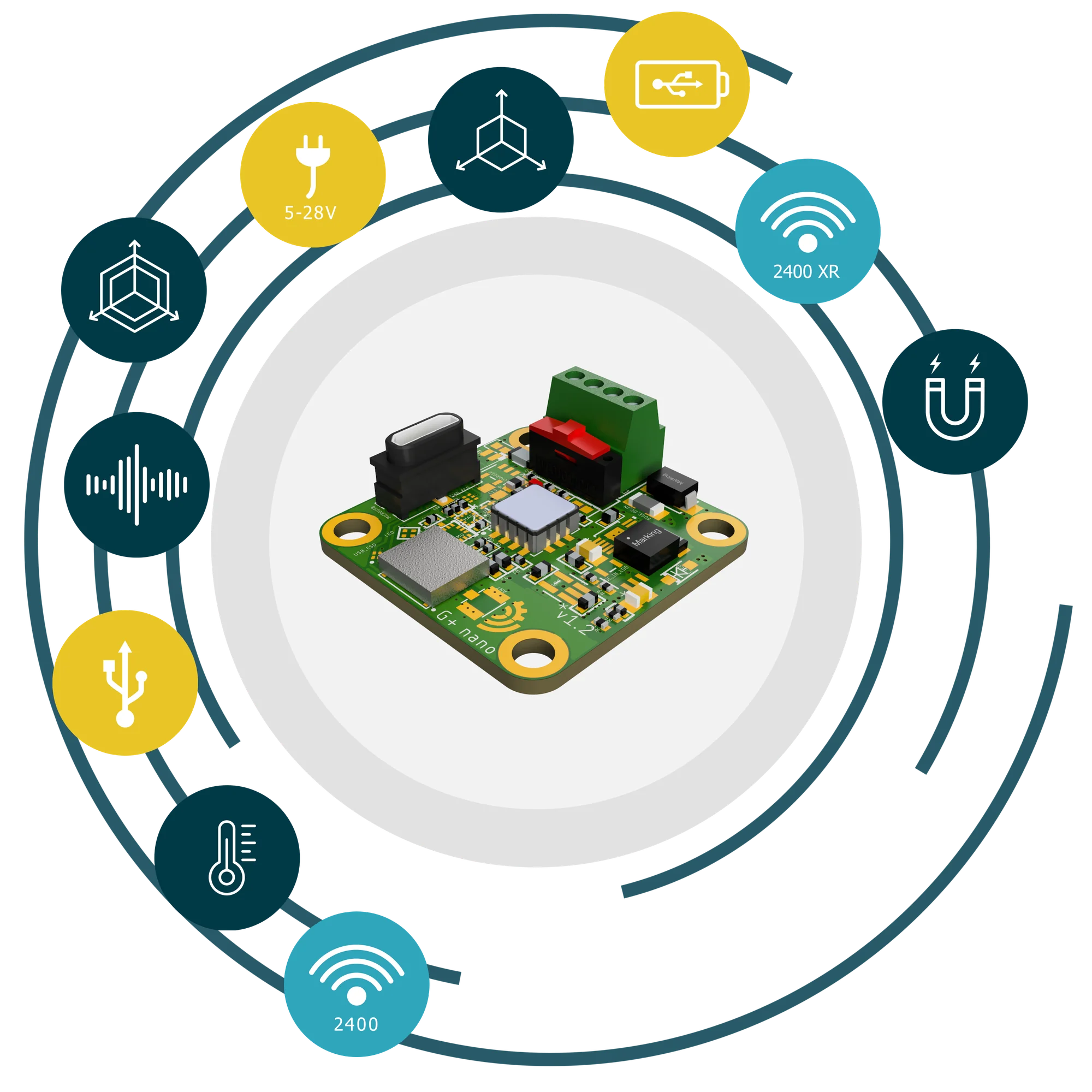
Integrated accelerometer, gyroscope and magnetometer (3 axes each) and temperature sensor
High sampling rates of up to 3.84 kHz on all acceleration and rotation rate axes simultaneously
High acceleration measuring range up to ± 256 g
Completely wireless with maximised rechargeable battery runtime and microsecond-accurate time synchronisation thanks to nemi Link 2400 wireless technology
Reliable, buffered data transmission to bridge wireless interruptions of up to several minutes – no lost samples
Long range of up to approx. 350 m in realistic scenarios
Transmission of live raw time data or data pre-evaluated by edge computing (smart data)
Weatherproof variant, potted or with an outer housing, on request

IMU sensor module for measuring accelerations and rotation rates, each around 3 axes; ACC up to 256 g; GYR up to 4000 °/s; signal resolution 16 bit

Triaxial magnetometer; measuring range up to 16 Gauss; signal resolution 16 bit

Internally installed temperature sensor

nemi Link 2400 - i4M's robust and flexible wireless technology in the 2.4 GHz frequency band; range up to 140 m (in buildings), up to 350 m (urban environment); max. aggregate sampling rate of 36 kHz at 24 bits per sample, reliable, buffered data transmission to bridge wireless interruptions of up to several minutes

Internally installed rechargeable battery with more than 10 hours of runtime at a sampling rate of 3.84 kHz (all six acceleration and rotation rate axes active); runtime of several weeks possible depending on configuration

Power supply / rechargeable battery charging via USB-C
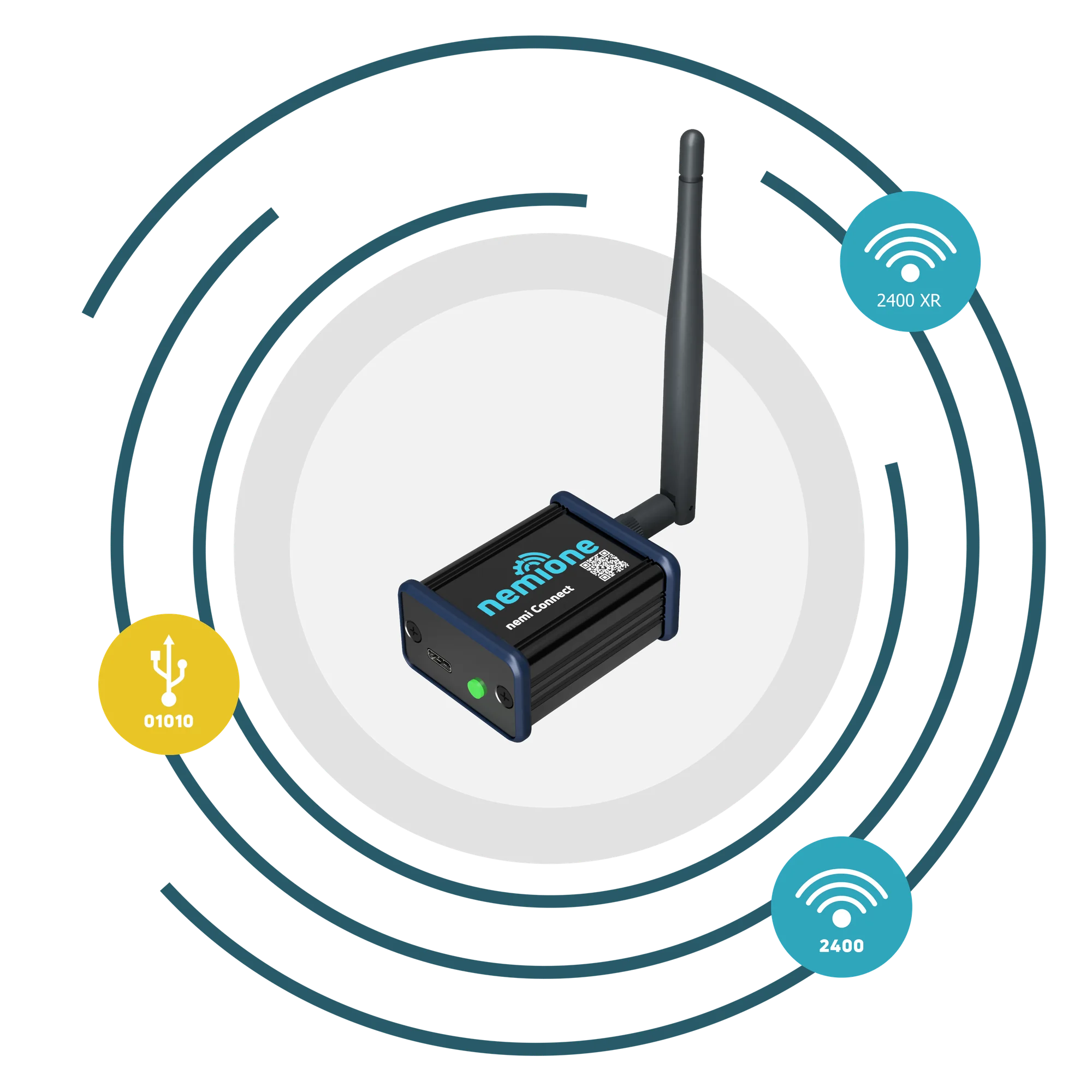
nemi Connect
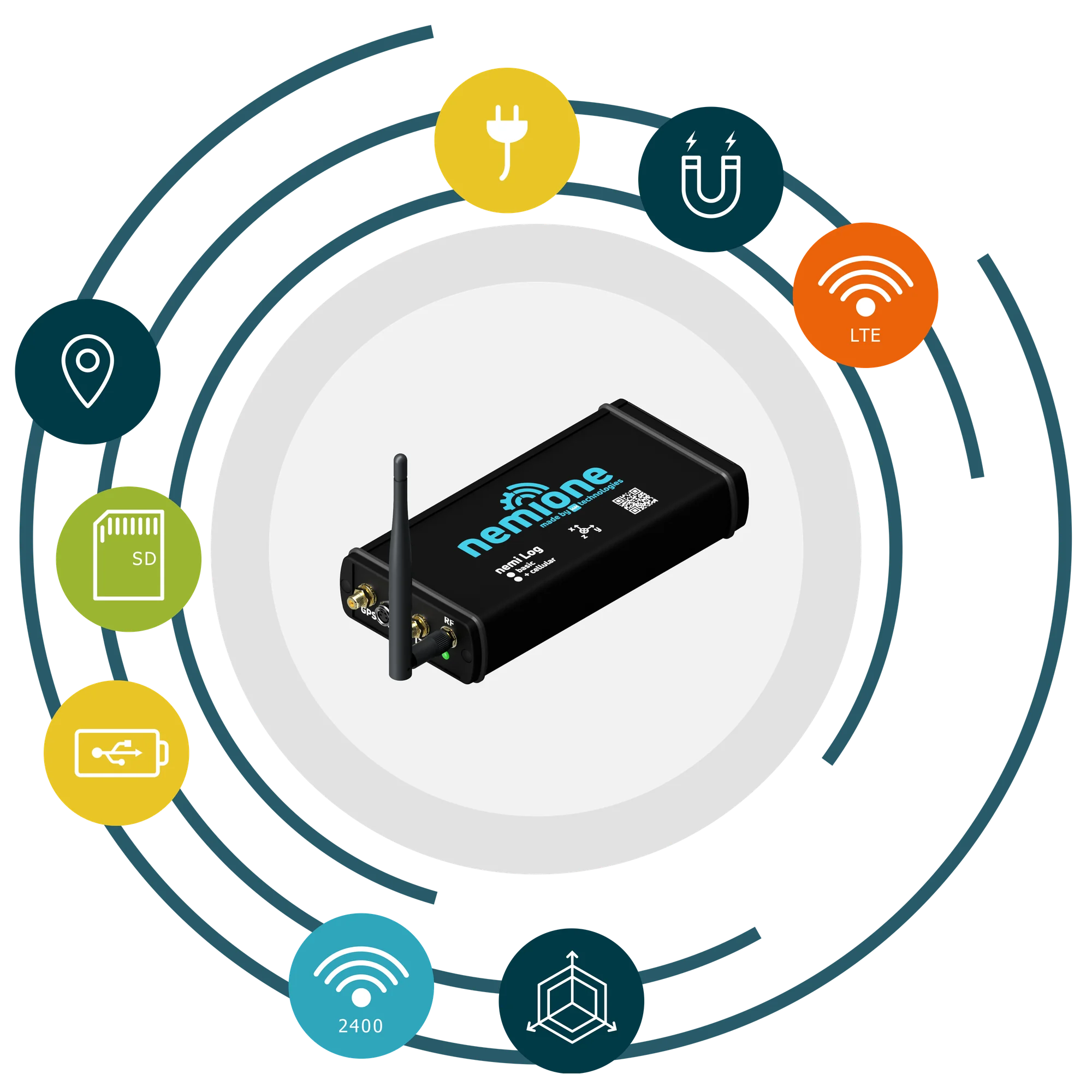
nemi Log (+ cellular)
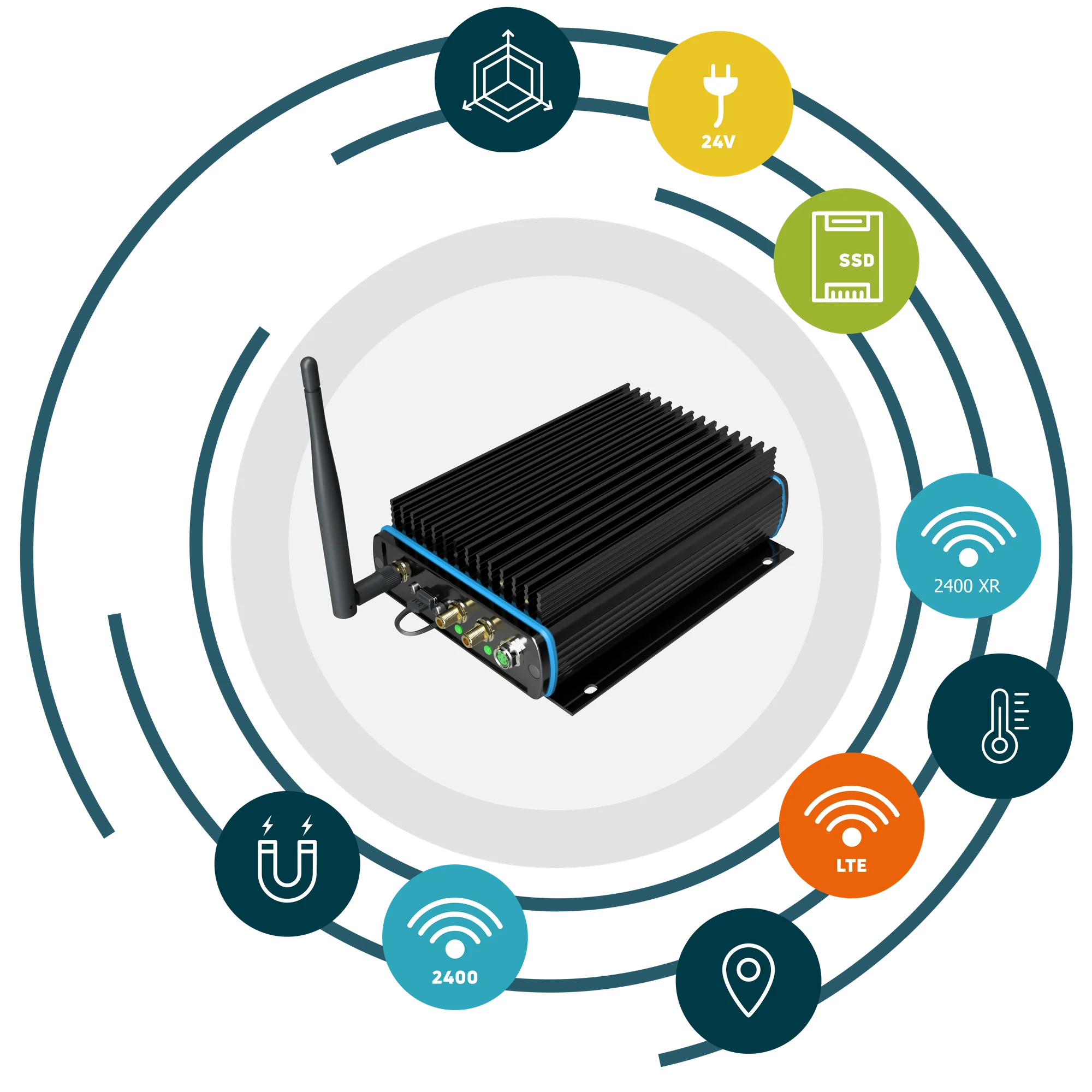
nemi EdgeBase
Answers to frequently asked questions about application, wireless technology, power supply and data processing.
nemi Motion is used for the wireless measurement of accelerations, rotation rates and magnetic fields in test and measurement applications as well as in monitoring. However, oscillations (vibrations, accelerations) and torsional vibrations can also be captured. It stands out in particular for its large measuring ranges, high sampling rates and a strong price-performance ratio. As a wireless product, it is particularly suitable for measurements on moving or rotating components and in highly dynamic applications.
Our products are state-of-the-art measurement technology components of the highest quality, made in Germany. We see ourselves as the technology leader in wireless measurement technology, with now 10 years of experience in the market and a large number of regular customers, and we offer service at the highest level. Our products offer high accuracy, high sampling rates, optimal time synchronisation and long ranges combined with a small size, minimal energy consumption and maximum battery runtimes. First-class software, as an essential part of measurement technology, is included with our products at no extra charge. Our interfaces are open and extensively documented, so that our customers can also easily develop their own data pipelines and UIs themselves. Such a portfolio is unique.
nemi Motion is best mounted by screwing it on, but it can also be attached by magnet, by clamping or by adhesive bonding
To get started, a nemi Motion and a nemi Connect or another receiver for our nemi Link 2400 wireless protocol are all you need. Software for configuration, live data display, recording and analysis is included.
Our nemi Studio software is included with all products. In combination with a nemi Connect (via USB), it enables not only the configuration of the sensors and channels but also live data display, data recording (as CSV) and online data analyses such as FFT.
Yes, our data transmission takes place live with low latency in a buffered data stream. If something cannot be transmitted because the wireless connection is currently blocked, the samples that accumulate in the meantime are buffered on the wireless sensors or nodes and transmitted as soon as the connection is back. This way, no samples are lost. Depending on the sampling rate and configuration, the buffers can bridge reception interruptions of a few seconds up to many minutes.
With a permanently good wireless connection, the latency of the data transmission is usually in the low single-digit to double-digit millisecond range. If the wireless connection is interrupted and samples have to be retransmitted, the latency rises briefly until the buffer on the sensors has been emptied.
Every sample receives a unique timestamp. The time resolution in the network is 1 microsecond, and the time synchronisation is usually accurate to less than +/- 10 microseconds. During longer wireless interruptions, the accuracy of the time synchronisation can briefly rise into the millisecond range.
To optimise the range, the antennas should be optimally aligned and positioned relative to each other. We have training material for this, which we can provide on request, and we are also happy to help with the installation. Either remotely or, as a service, on site. The range also depends directly on the sampling rate. The lower the sampling rate selected, the slower the wireless transmission can operate. At 3.84 kHz and six active axes, we achieve approx. 20 m indoors at 2 Mbit/s. At 120 Hz and six active axes, realistic ranges of up to 350 m can be achieved at 125 kbit/s.
The maximum signal bandwidth at -3 dB attenuation and a 3.84 kHz sampling rate is 600 Hz for the accelerometers in the ±2/4/8/16 g measuring ranges, 1920 Hz in the ± 32/64/128/256 g measuring ranges, and 528 Hz for the rotation rate sensors.
The (very small) internal rechargeable battery lasts more than 10 hours with continuous live data transmission of all axes at 3.84 kHz. At lower sampling rates, considerably longer. If the sensor is operated intermittently, i.e. in a cycle of (e.g. 60 s) measuring time and (e.g. 600 s) sleep time, this runtime can be extended significantly further. Please ask us directly about this.
The battery voltage is recorded at all times and reported wirelessly. This shows the current state of charge of the internal or external rechargeable batteries/batteries
Yes, external battery packs can be connected via USB-C. These can either be built yourself or purchased from us. As the applications are very different (different runtimes, form factors, maximum temperatures, battery safety requirements), very different battery packs result. Please therefore enquire about these directly with us. We make everything possible.
Yes. In sleep mode, the sensor consumes almost no power. The rechargeable battery thus lasts for weeks. The sensor automatically wakes up briefly at regular intervals to listen for whether it should change its mode again. If not, it stays in sleep mode.
The easiest way is to use your own sealed housing. A nemi Motion can be used inside it. We can also pot the nemi Motion internally, which, however, makes it impossible to replace the rechargeable battery later.
The rechargeable battery lasts hundreds of charge cycles. At some point, however, every rechargeable battery ages. In this case, we offer a rechargeable battery replacement as a service.
For certain applications in which high accuracy matters (e.g. for inclination measurements), we recommend having the acceleration axes calibrated by us. With this 3D calibration, all acceleration axes are optimally calibrated, so that the static measurement deviation is less than 0.5 %. For dynamic measurements, cross-sensitivity and damping, which in turn is frequency-dependent, must still be taken into account.
Compared with wired systems, our wireless solutions are characterised by very low measurement noise, in particular because we have no supply and transmission cables that can pick up interference.
In the nemi Motion, all axes are sampled simultaneously with separate analogue-to-digital converters.
Yes, the MEMS measuring principle allows the measurement of static accelerations, i.e. of the gravity vector. For this reason, the resultant of the measured acceleration at standstill always has a value of 1 g = 9.81 m/s² (with very slight deviations depending on the measuring location on the Earth's surface).
Yes, this is possible both with the accelerometer (e.g. in the tangential direction on a shaft) and directly with the gyroscope.
Yes, with sensor fusion even very accurately. Our nemi Studio software can perform these calculations directly.
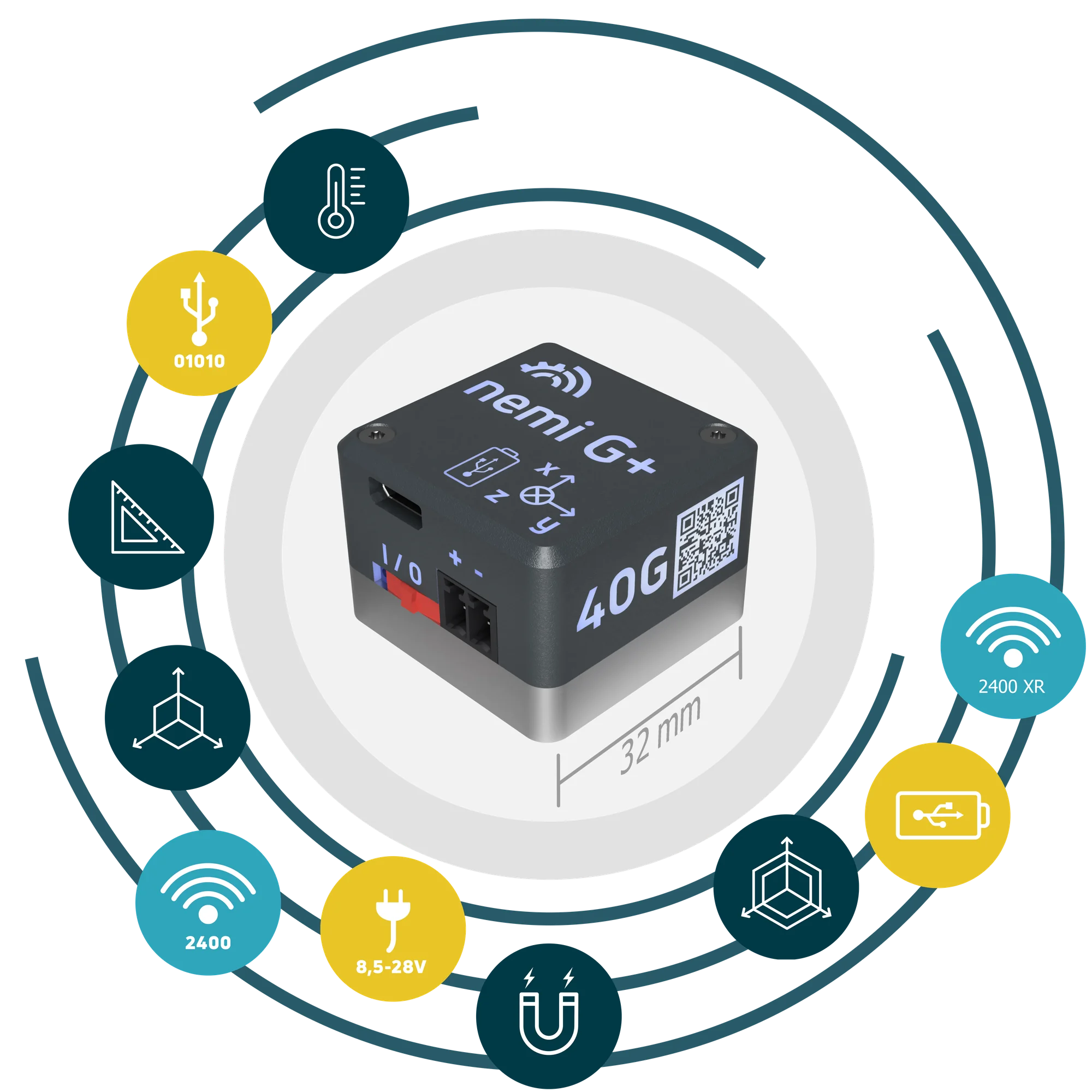
For quasi-static inclination measurements, the nemi G+ is better suited owing to its significantly higher resolution and its lower measurement noise. In dynamic applications (e.g. on rotating shafts), approx. 0.1° angular resolution / repeatability / accuracy is typically possible with the internal IMU of the nemi Motion.
Owing to its lower resolution, rather not; please use the nemi G+ for this.
nemi Link 2400 is our proprietary wireless protocol for wireless measurement technology in the 2.4 GHz frequency band. Compared with Bluetooth, it enables higher data rates and ranges, more sensor nodes per network and much better time synchronisation. Compared with WiFi, it enables significantly lower energy consumption and thus longer rechargeable battery runtimes.
This depends on the selected sampling rate; depending on the sampling rate, this is a few seconds to several minutes
Every sample receives a timestamp. A missing sample is therefore immediately detectable. Our software also indicates immediately if samples should be lost. However, this only happens during prolonged interruptions of the wireless connection that cannot be bridged by the internal buffer memories of the sensors.
Up to 8 nemi Motion or other sensors / nodes can be operated in one nemi Link 2400 wireless network. They share an aggregate sampling rate, which in turn depends on the wireless speed and thus on the desired wireless range. Up to 3 nemi Motion, each with all six axes active, can be operated in a wireless network with 2 Mbit at the maximum data rate of 3.84 kHz. At lower sampling rates, 8 sensors are also possible. Please use our Config Tool to calculate the channel utilisation.
In an overlapping wireless area, approx. 10 sensor networks are possible at the same time, i.e. 10 x 8 = 80 sensors or nodes.
In an overlapping wireless area, approx. 10 sensor networks are possible at the same time, i.e. 10 x 8 = 80 sensors or nodes. In this case, 10 receivers must be used, for example 10 nemi Connect on one measurement PC. This is possible with a USB hub.
Yes, we disclose the USB protocol of our nemi Connect on request. In addition, there is a Python API that makes access to the live data very easy. Every customer can use it to build their own data pipeline or their own user interface. It is even easier with, e.g., the Q.Station from Gantner Instruments, to which several nemi Connect can be connected directly. A plugin on the Q.Station takes care of the time-synchronous storage of the data from wired sensors and our wireless sensors / nodes.
There are several options:
Our systems record as CSV, Parquet or i4M .bin files, for which we supply Python decoders that convert the .bin formats into Pandas DataFrames or CSV files.
We supply software for plotting and for initial analysis of the data. However, the data can also easily be analysed with other tools such as Matlab, Octave, Python, etc.
nemi Log and nemi EdgeBase can forward the measurement data in time-aggregated form (i.e. min/max/avg values over certain time intervals) via MQTT to an MQTT broker. From there, they can be loaded into a dashboard via a database. We offer the creation and hosting of this entire data pipeline incl. database and dashboards. However, you can also use your own solutions.
The nemi Motion is charged via a USB-C cable. We supply a cable with the sensors. Charging takes approx. 3 h.
Yes, this is possible. Please contact us about it.
There are projects that have to start from a blank sheet of paper because something new and unprecedented is to be created. This is also how our nemione® products came about, which have become series products over many iterations. i4M analyses mechanical systems, determines the relevant measured variables and develops customised, highly integrated measurement technology to find the optimal solution for your individual challenge.
To i4M's customised solutionsnemione® is a trademark of
i4M technologies GmbH
Försterstraße 5
52072 Aachen
+49 241 56 00 22 00
sales@nemi.one