

nemi G+ ultra nano
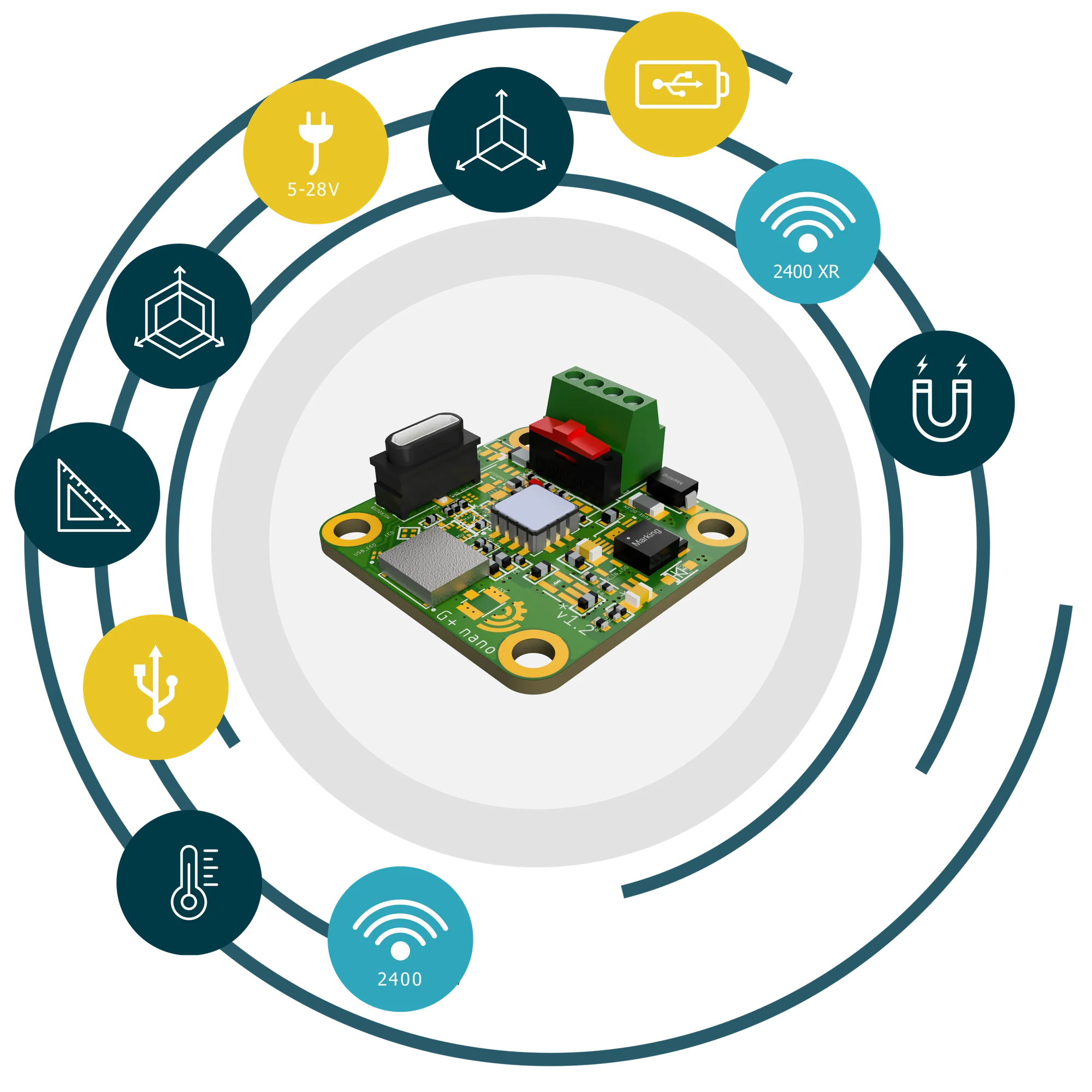
nemi G+ ultra nano is a compact Integrated Sensing product in the form of a circuit board for wireless, highly dynamic and broadband measurement of vibrations, oscillations and accelerations. A live sampling rate of up to 26.7 kHz enables a signal bandwidth of up to 6.7 kHz. Steep-edged integrated filters allow high bandwidths even at lower sampling rates, for example up to 1.2 kHz. This allows the requirements of the standards ISO/DIN ISO 20816 and DIN ISO 2954 to be met.
Additional integrated sensors allow the simultaneous acquisition of rotation rates and magnetic field strengths and thus of the position in space, which can save additional rotation angle sensors, especially in rotating applications.
The highly efficient and robust nemi Link 2400 wireless technology achieves very long battery runtimes and long ranges of up to approx. 100 m – without missing samples.
Thanks to its compact and lightweight design, nemi G+ ultra nano can be easily integrated into the smallest installation spaces and either enables you to build your own compact, sealed sensors or turns your components and machines into smart products. It particularly excels in highly dynamic applications such as NVH (Noise Vibration Harshness) measurements or the monitoring of motors and pumps, as well as on rotating or moving components, for example on rotor shafts of wind turbines or in test benches.
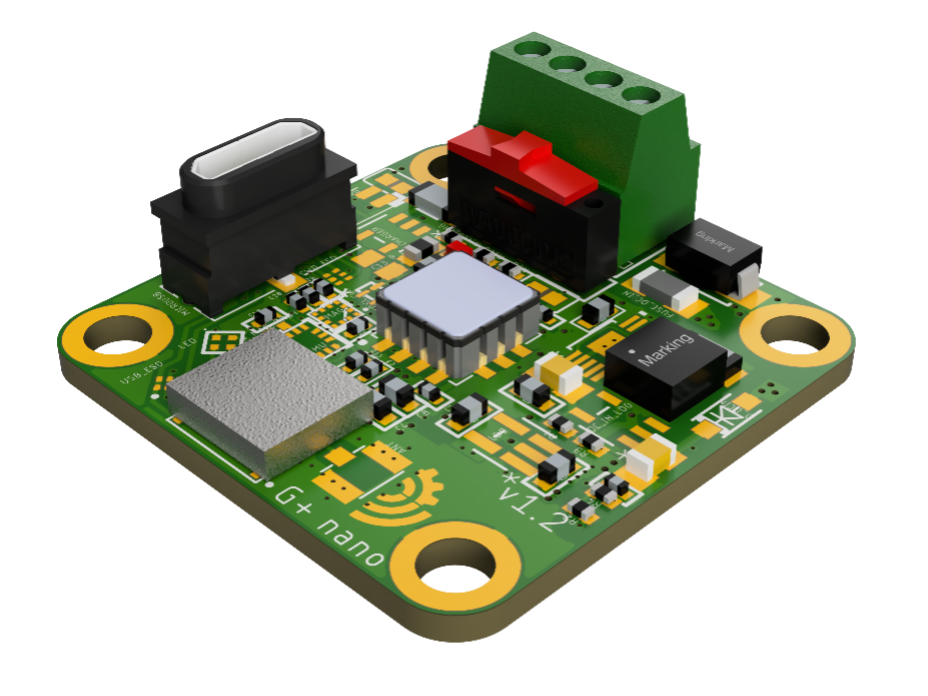
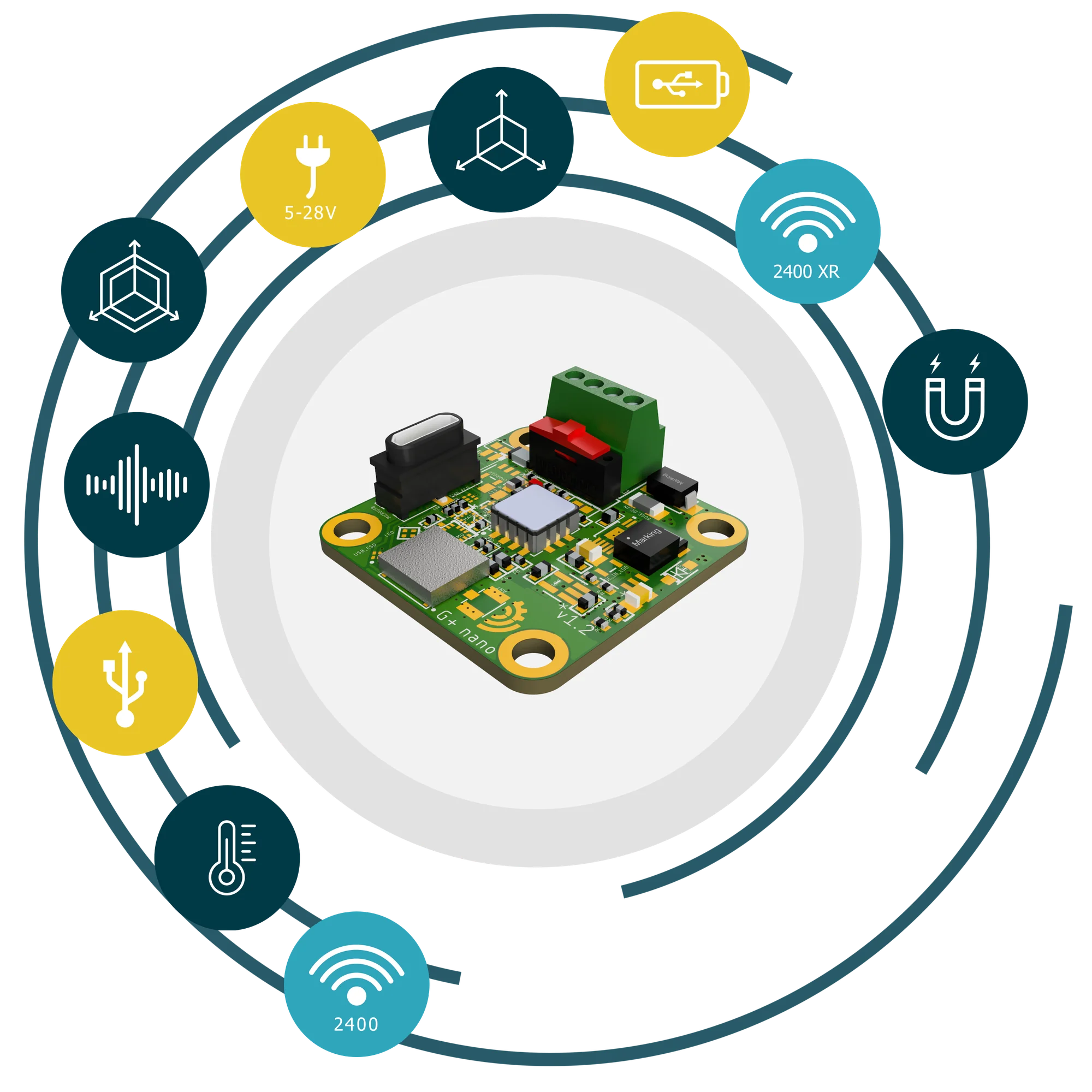
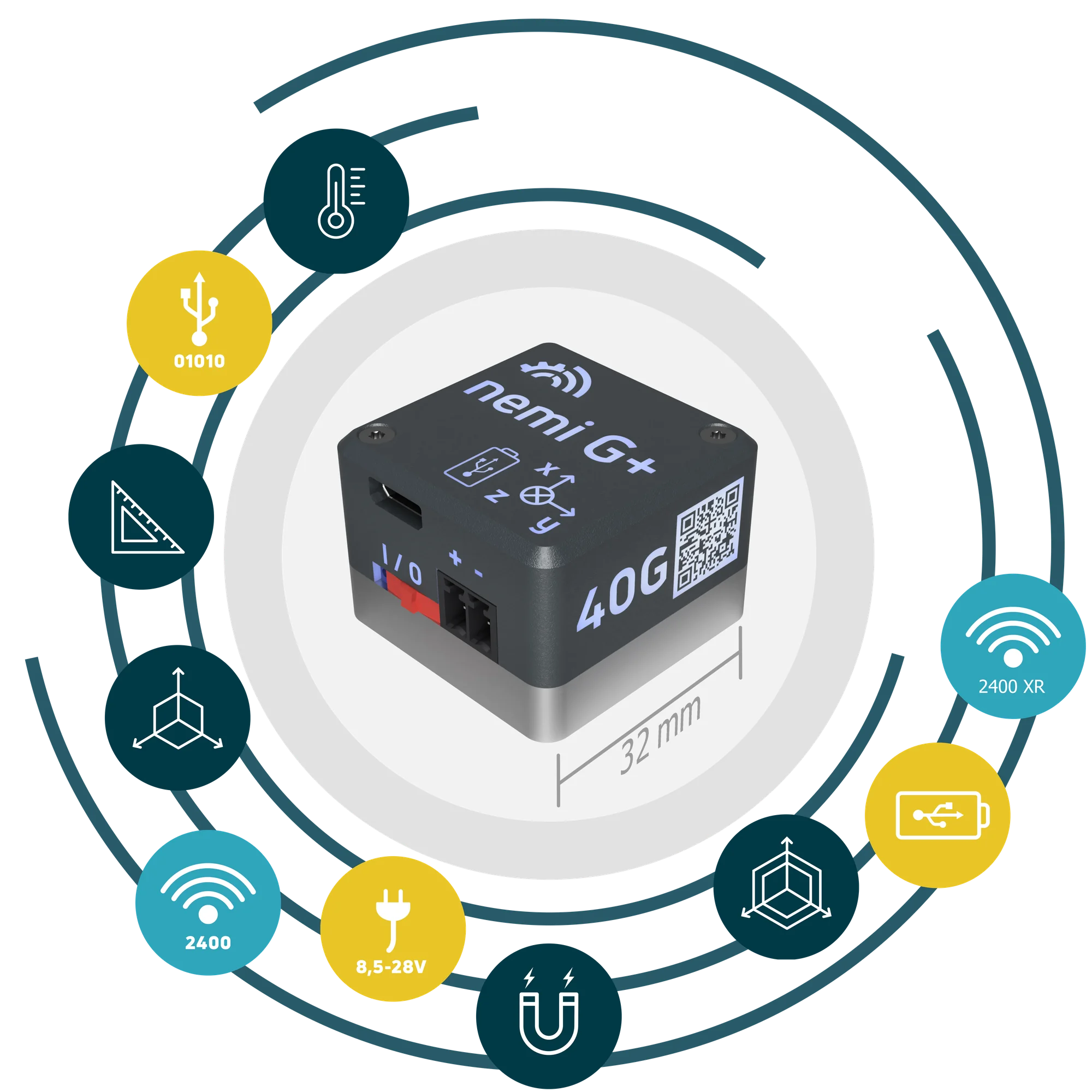
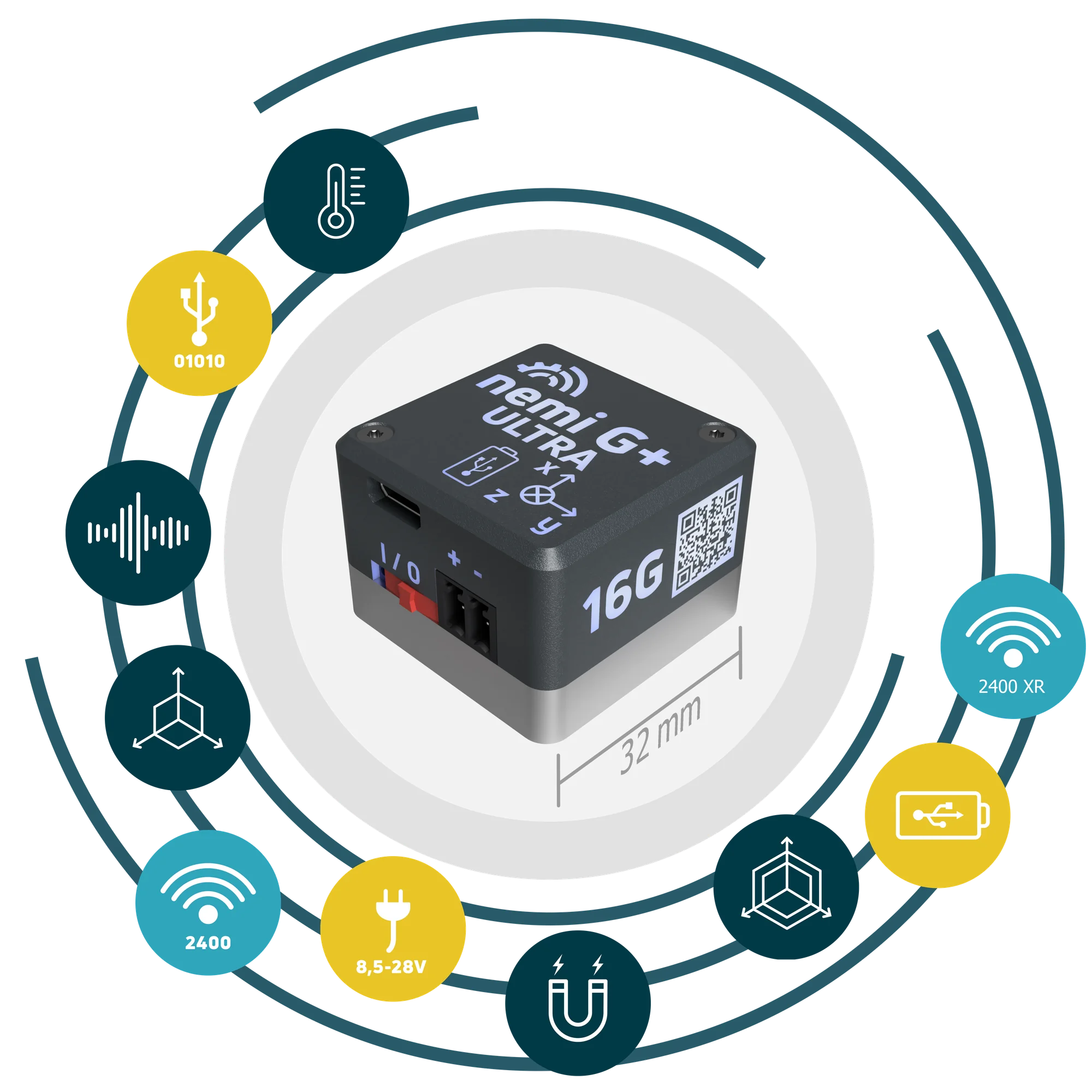
Small and lightweight design (30 x 30 x 12) mm, 6 grams
High-resolution, low-noise, capacitive MEMS accelerometer
Triaxial, low-noise, capacitive MEMS accelerometer with a high signal bandwidth from 0 Hz static to 6.7 kHz dynamic
Meets the requirements of the standards ISO/DIN ISO 20816 and DIN ISO 2954
Completely wireless with maximised battery runtime and microsecond-accurate time synchronisation thanks to nemi Link 2400 wireless technology
Reliable, buffered data transmission to bridge wireless interruptions of up to several minutes – no lost samples
Long range of up to approx. 100 m in realistic scenarios
Transmission of live raw time-domain data or data pre-evaluated by edge computing (smart data)
Weatherproof variant with outer housing on request

Low-noise, triaxial, capacitive MEMS accelerometer; measuring range up to 16 g; live sampling rate of up to 26.7 kHz for one axis and 13.3 kHz for all three axes; steep-edged filters for an effective signal bandwidth of 1.2 kHz even at a sampling rate of 3.3 kHz; signal resolution 16 bit

IMU sensor module for measuring accelerations and rotation rates around 3 axes each; ACC up to 16 g; GYR up to 4000 °/s; signal resolution 16 bit

Triaxial magnetometer; measuring range up to 16 Gauss; signal resolution 16 bit

Internal temperature sensor

nemi Link 2400 - i4M's robust and flexible wireless technology in the 2.4 GHz frequency band; range up to 140 m (in buildings), up to 350 m (urban environment); max. aggregate sampling rate of 36 kHz at 24 bits per sample, reliable, buffered data transmission to bridge wireless interruptions of up to several minutes

Connection for a rechargeable battery

Power supply / battery charging via terminal input or micro USB

Continuous operation with wide-range voltage input 8.5 - 28 V DC
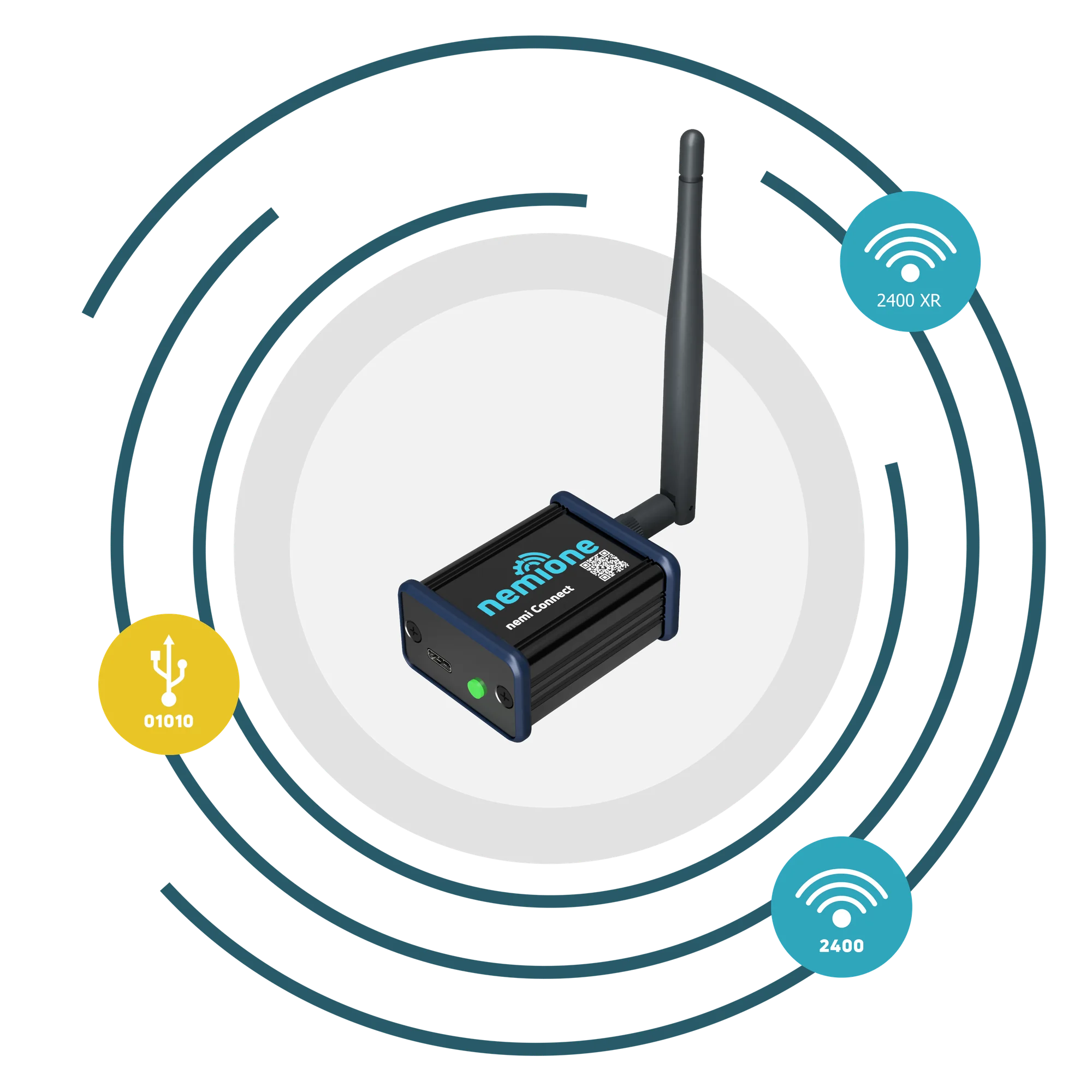
nemi Connect
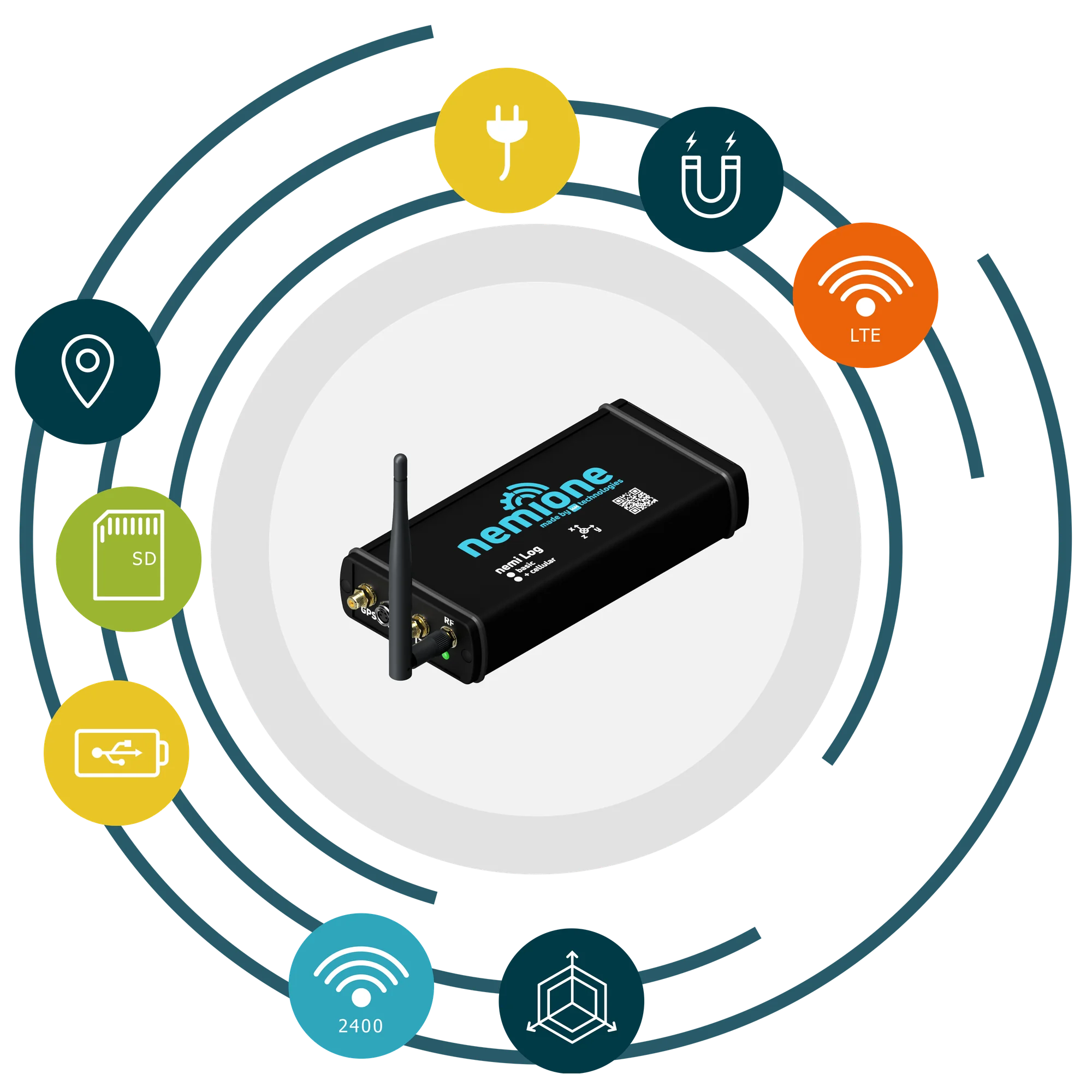
nemi Log (+ cellular)
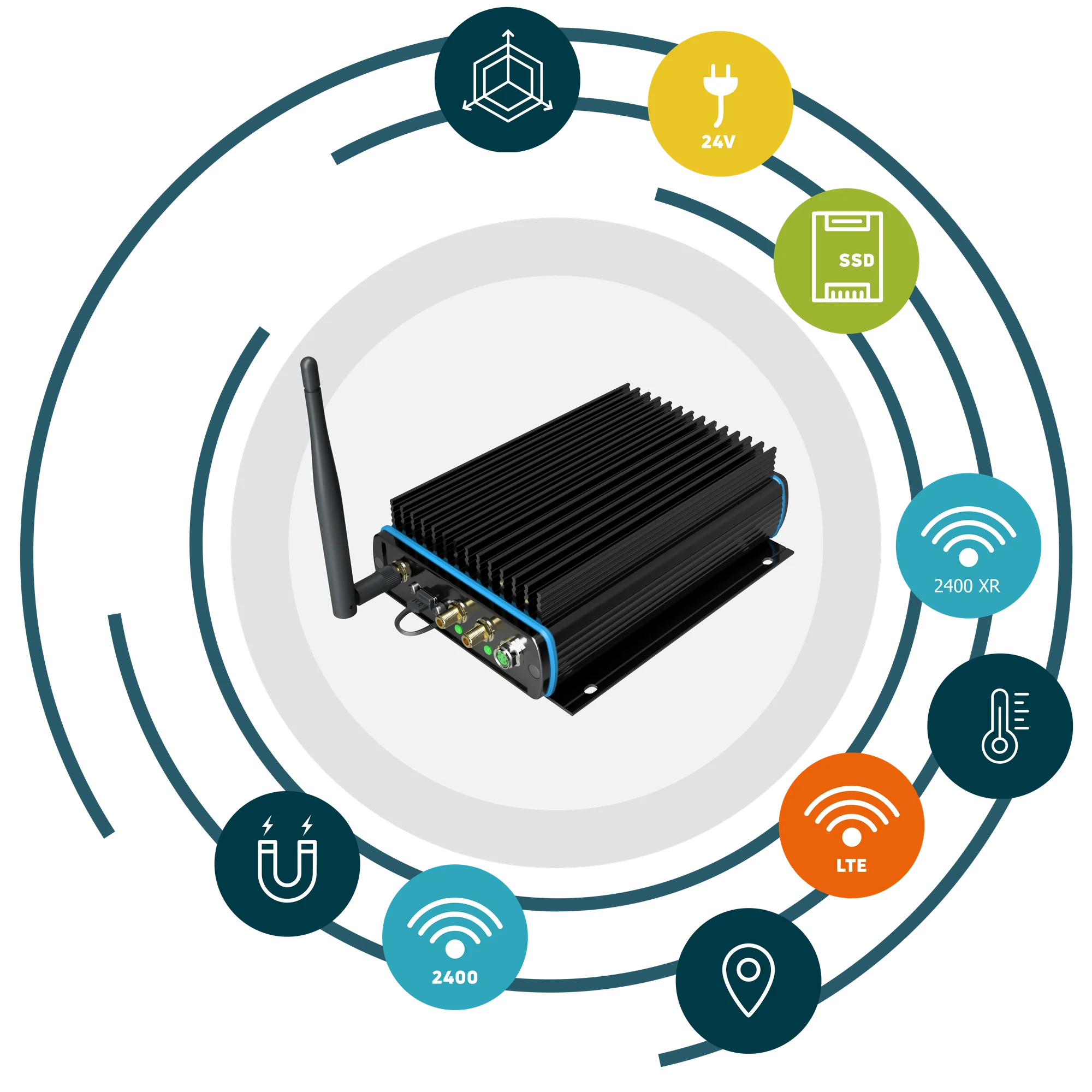
nemi EdgeBase
Answers to frequently asked questions about application, wireless technology, power supply and data processing.
nemi G+ ultra nano is used for the wireless measurement of high-frequency oscillations (vibrations, accelerations) and other measured variables in test and measurement applications as well as in monitoring. It stands out in particular for its high signal bandwidth, which is up to 6.7 kHz (-3 dB). Especially when it comes to meeting the requirements of the standards ISO/DIN ISO 20816 and DIN ISO 2954, nemi G+ ultra nano is the right product. As a product in the form of a circuit board, it is particularly suitable for integration into components (Integrated Sensing) or for easily building your own wireless sensors in housings tailored to the respective application. It is a wireless product that is particularly suitable for measurements on moving or rotating components and in highly dynamic applications.
Our products are state-of-the-art measurement technology components of the highest quality, made in Germany. We see ourselves as the technology leader in wireless measurement technology, now with 10 years of experience in the market and a large number of regular customers, and we offer service at the highest level. Our products offer high accuracy, high sampling rates, optimal time synchronisation and long ranges combined with small size, minimal energy consumption and maximum battery runtimes. First-class software, as an essential part of measurement technology, is included with our products at no extra charge. Our interfaces are open and extensively documented, so our customers can also easily develop their own data pipelines and UIs themselves. Such a portfolio is unique.
nemi G+ ultra nano can be screwed on using the screw holes; adhesive bonding or clamping is also conceivable.
Yes, this is possible. We can omit the USB socket and the terminal blocks. However, the sensor can then no longer be reconfigured via USB (the wireless parameters are then fixed) and the power supply must be connected via a soldered-on cable.
To get started, all you need is a nemi G+ ultra nano, a small antenna, a battery or a rechargeable battery and a nemi Connect or another receiver for our nemi Link 2400 wireless protocol. Software for configuration, live data view, recording and analysis is included.
Our nemi Studio software is included with all products. In combination with a nemi Connect (via USB), it enables not only the configuration of the sensors and channels but also live data display, data recording (as CSV) and online data analyses such as FFT.
Yes, our data transmission takes place live with low latency in a buffered data stream. If something cannot be transmitted because the wireless link is temporarily blocked, the samples arising in the meantime are buffered on the wireless sensors or nodes and transmitted as soon as the link is back. This way, no samples are lost. Depending on the sampling rate and configuration, the buffers can bridge reception interruptions of a few seconds to many minutes.
With a consistently good wireless link, the latency of the data transmission is usually in the low single- to double-digit millisecond range. If the wireless link is interrupted and samples have to be retransmitted, the latency rises briefly until the buffer on the sensors has been emptied.
Every sample receives a unique timestamp. The time resolution in the network is 1 microsecond and the time synchronisation is usually accurate to less than +/- 10 microseconds. During longer wireless interruptions, the accuracy of the time synchronisation can briefly rise into the millisecond range.
To optimise the range, the antennas should be optimally aligned and positioned relative to each other. We have training material for this, which we can provide on request, and we are also happy to help with the installation. Either remotely or as an on-site service. The range also depends directly on the sampling rate. The lower the sampling rate selected, the slower the wireless transmission can run. At 26.7 kHz and one active axis, we achieve approx. 20 m indoors at 2 Mbit/s. At 3.3 kHz and three active axes, realistic ranges of up to 150 m can be achieved at 500 kbit/s.
The maximum signal bandwidth at -3 dB attenuation and a sampling rate of 26.7 kHz is approx. 6.7 kHz.
The current consumption depends heavily on the sampling rate and the operating mode. It is usually approx. 5 – 20 mA at a supply voltage of 3.3 V. In sleep mode, it is approx. 0.05 - 0.2 mA, depending on the wake-up interval. If the sensor is operated intermittently, i.e. in a cycle of (e.g. 60 s) measuring time and (e.g. 600 s) sleep time, the average consumption drops considerably further. Please ask us directly about this.
The supply voltage is recorded at all times and transmitted wirelessly.
Yes, external battery packs can be connected. These can either be built yourself or purchased from us. As the applications vary greatly (different runtimes, form factors, maximum temperatures, battery safety requirements), the resulting battery packs vary greatly too. Please therefore enquire about these directly with us. We make everything possible.
Yes. In sleep mode, the sensor consumes almost no power (approx. 0.05 – 0.2 mA at a supply voltage of 3.3 V, depending on the wake-up interval). The rechargeable battery thus lasts for months to years. The sensor automatically wakes up briefly at regular intervals to check whether it should change its mode again. If not, it remains in sleep mode.
The easiest way is to use your own sealed housing.
For certain applications in which high accuracy matters, we recommend calibration by us. With this 3D calibration, all axes are optimally calibrated so that the static measurement deviation is less than 0.5 %. For dynamic measurements, cross-axis sensitivity and damping, which in turn is frequency-dependent, must still be taken into account.
Compared to wired systems, our wireless solutions stand out for their very low measurement noise, in particular because we have no supply and transmission cables that can pick up interference.
In the nemi G+ ultra nano, all axes are sampled simultaneously with separate analogue-to-digital converters.
Yes, the MEMS measuring principle allows the measurement of static accelerations, i.e. of the gravity vector. For this reason, the resultant of the measured acceleration at standstill always has a value of 1 g = 9.81 m/s² (with very slight deviations depending on the measuring location on the earth's surface).
Yes, this is possible both with the accelerometer itself (e.g. in the tangential direction on a shaft) and with the internal gyroscope.
Yes, with sensor fusion even very accurately. Our nemi Studio software can perform these calculations directly.
For quasi-static inclination measurements, the nemi G+ nano (not ultra) is better suited due to its significantly higher resolution and lower measurement noise. In dynamic applications (e.g. on rotating shafts), approx. 0.1° angular resolution / reproducibility / accuracy is typically possible with the internal IMU of the nemi G+ ultra nano.
Due to its lower resolution, rather not; please use the nemi G+ nano (not the ultra variant) for this
nemi Link 2400 is our proprietary wireless protocol for wireless measurement technology in the 2.4 GHz frequency band. Compared to Bluetooth, it enables higher data rates and ranges, more sensor nodes per network and much better time synchronisation. Compared to WiFi, it enables significantly lower energy consumption and thus longer battery runtimes.
This depends on the selected sampling rate; depending on the sampling rate, this is a few seconds to several minutes
Every sample receives a timestamp. A missing sample is therefore immediately recognisable. Our software also indicates immediately if samples should be lost. However, this only happens with prolonged interruptions of the wireless link that cannot be bridged by the internal buffer memories of the sensors.
Up to 8 nemi G+ ultra nano or other sensors / nodes can be operated in one nemi Link 2400 wireless network. They share an aggregate sampling rate, which in turn depends on the wireless speed and thus on the desired wireless range. One nemi G+ ultra nano can be operated at the maximum data rate of 26.7 kHz with one active axis in a wireless network with 2 Mbit. For three active axes, the sampling rate must be reduced to 13.3 kHz. If 3 sensors are to be operated on one wireless channel, it must be reduced to 6.6 kHz. At lower sampling rates of 3.3 kHz, 8 sensors are also possible. Please use our Config Tool to calculate the channel utilisation.
In an overlapping wireless area, approx. 10 sensor networks are possible at the same time, i.e. 10 x 8 = 80 sensors or nodes.
In an overlapping wireless area, approx. 10 sensor networks are possible at the same time, i.e. 10 x 8 = 80 sensors or nodes. In this case, 10 receivers must be used, for example 10 nemi Connect on one measurement PC. This is possible with a USB hub.
Yes, we disclose the USB protocol of our nemi Connect on request. There is also a Python API that makes access to the live data very easy. Every customer can use it to build their own data pipeline or user interface. It is even easier with, for example, the Q.Station from Gantner Instruments, to which several nemi Connect can be connected directly. A plugin on the Q.Station handles the time-synchronised storage of the data from wired sensors and our wireless sensors / nodes.
There are various options:
Our systems record as CSV, Parquet or i4M .bin files, for which we supply Python decoders that in turn convert the .bin formats into Pandas DataFrames or CSV files.
We supply software for plotting and for initial analysis of the data. However, the data can also easily be analysed with other tools such as Matlab, Octave, Python etc.
nemi Log and nemi EdgeBase can forward the measurement data in time-aggregated form (i.e. min/max/avg values over certain time intervals) via MQTT to an MQTT broker. From there, they can be loaded into a dashboard via a database. We offer the creation and hosting of this entire data pipeline including database and dashboards. However, you can also use your own solutions.
Yes, this is possible. Please contact us about this.
There are projects that have to start from a blank sheet of paper because something new and unprecedented is to be created. This is also how our nemione® products came about, which have become series products over many iterations. i4M analyses mechanical systems, determines the relevant measured variables and develops customised, highly integrated measurement technology to find the optimal solution for your individual challenge.
To i4M's customised solutionsnemione® is a trademark of
i4M technologies GmbH
Försterstraße 5
52072 Aachen
+49 241 56 00 22 00
sales@nemi.one